


Cinda Real: StoryCrafters Case Study
Written by Sanja Đuričković, educator and founder of Pričotvorci/StoryCrafters→.
This May, Sanja Đuričković took Cinda Real→ as the tale for her regular workshops with children, where they bring stories to life through various games, they embody, talk, think, imagine and perform tales. With Sanja’s guidance, the children reimagined Cinda’s story, introduced new characters, and created their own sequel. Enjoy this brief review of her latest workshops.
The workshops for children aged 4–7 and 7–10 were held in the courtyard of the “Nikola Đurković” Cultural Centre in Kotor and lasted 90 minutes each. Both groups watched the animated film Cinda Real→ together. The workshop format was as follows:
1. Introduction and evocation
2. Reading with props
3. Analysis using RWCT and SEL techniques
4. Dramatisation and co-creation
5. Reflection

Younger group (ages 4–7)
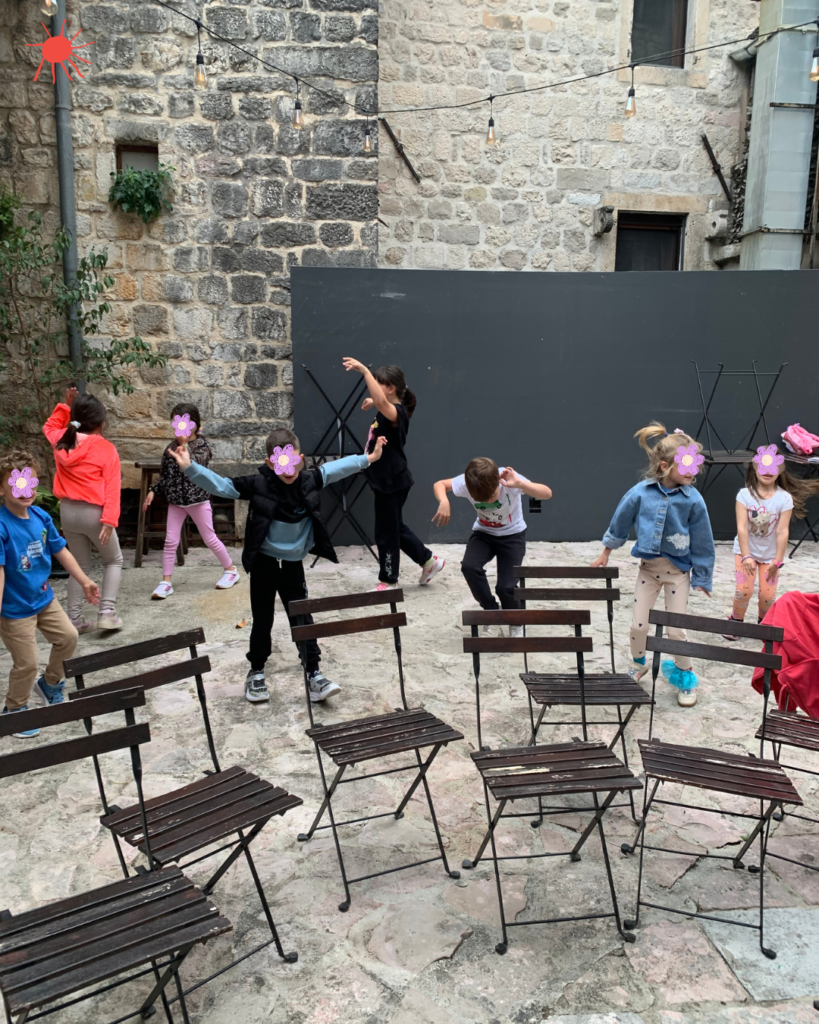
With the younger group, we began with a dance game called “Everyone Dances Differently”. The children were asked to dance slowly, quickly, using only one part of their body, as if they were in the dark, as if their legs were made of jelly, or as if they were at a ball. This activity helped us to open up the topic of dance through our bodies, through play, and embracing different ways of moving.
In the evocation phase, we talked about some key words: stepmother, ball, dress, prince, hard work, sisters. I asked them which story these words reminded them of, what they usually liked about that fairy tale, and what they disliked. In this way, we gradually moved from the familiar fairy tale towards a different version of Cinderella.
I read the text from an e-reader, accompanied by mini-illustrations I had prepared based on the animated film. I drew the characters and turned them into puppets on a stick, so that the children could use them during the dramatisation.
For the analysis, we used a pre-prepared Cinda’s emotional roadmap. We followed Cinda’’s journey through the story: the house, the square, the forest, the fairy godmother’s house, the ball and the return home. At each location, we discussed how Cinda felt, who helped her, where she faced the greatest difficulties, and where she showed courage.
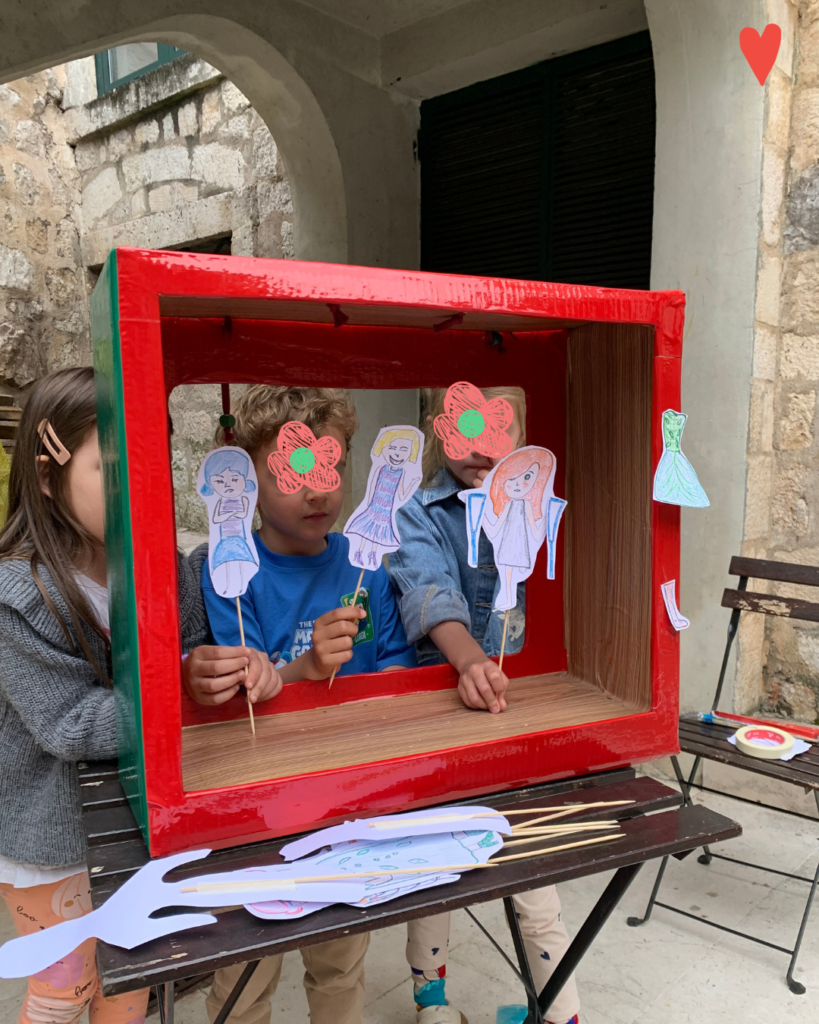

We then dramatised the story using puppets on a stick. The children took turns in the different roles: Cinda, the stepmother, the stepsisters, the fairy godmother, the prince, the animals and the guests at the ball.
In the final reflection, the children came up with a completely new character who enters the story and talks to Cinda. Their suggestions were very interesting: a friend who wants to help her, an owl that wants to carry her far away, a robber who wants her dress, a horse that wants to take her wherever she wishes. At the end of the workshop, we also watched an animated film.
Older group (ages 7–10)
With the older group, the schedule was slightly altered due to the space available, so we first watched the film together with the younger group. Afterwards, we continued the workshop with the older children through discussion, reading, analysis and dramatisation.
During the introduction and evocation phase, we discussed how Cinda Real differs from the classic fairy tale. The children themselves identified several important differences: the magic doesn’t end at midnight, the focus is on the wooden leg instead of the glass slipper, Cinda has a father, the animals actively help her, and in the end, she doesn’t marry the prince. We then read the text from an e-reader, accompanied by illustrations and puppets on a stick.
For the analysis, we used the “character on the wall” technique. We discussed how others see Cinda and how she sees herself.
How others see Cinda:
✹ They make fun of her because she has one leg and uses crutches.
✹ They tease her because the prince likes her.
✹ They think she cannot dance.
✹ Some believe she is incapable.
✹ In her dream she had two legs when her mother was alive, suggesting that she may have experienced an accident.
How Cinda sees herself:
✹ She believes she can dance and knows how to do it.
✹ She was more confident when both her parents were alive, but now feels more insecure because her stepmother and stepsisters make fun of her.
✹ She believes in herself because she goes to get the invitation on her own.
✹ She gets back up and keeps going, even when others push her around.
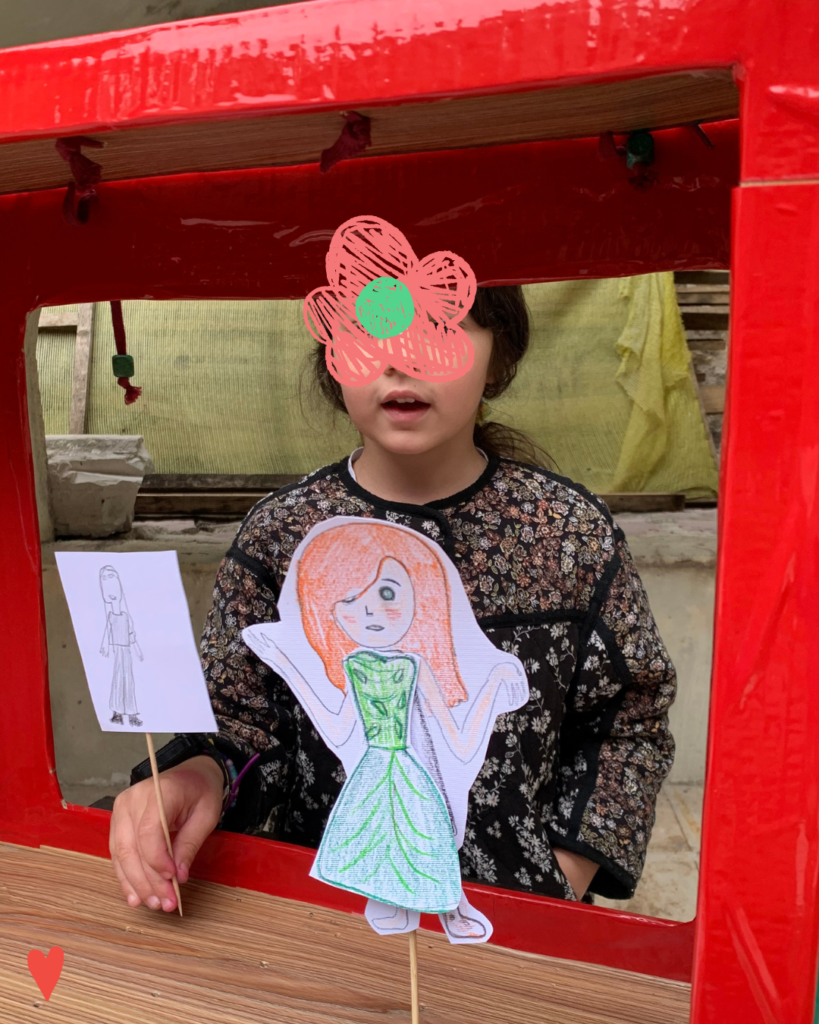

During the drama section, we first explored role-play using the puppets on a stick, and then the children created their own twisted version of the story. Their task was to choose one scene and change it completely. Here are their twists:
✹ Cinda decides that she wants to marry the prince (suggested by a boy).
✹ The woodpecker works for the stepmother and destroys Cinda’s wooden leg, but the prince still likes Cinda. He asks her to marry him, and she tells him they need to get to know each other better.
✹ When Cinda falls in the town square, someone helps her.
✹ The stepmother and stepsisters help Cinda and look after her.
✹ The stepmother is kind.
The final outputs of the workshops included puppets on a stick, Cinda’s emotional roadmap, the “character on the wall” activity, new characters invented by the children, and alternative versions of scenes from the story. Through these activities, the children reflected on what might be fairer, how Cinda feels, how others perceive her, and what it means to support someone who is excluded or misunderstood.
What was particularly valuable was how naturally the story opened up a conversation about acceptance, difference, support and a child’s right to express what they want. The children clearly recognised that Cinda is not simply a character who needs help, but someone with her own desires, strength, determination and voice.