


Filip and the Paper Theatre: StoryCrafters Case Study
Written by Sanja Đuričković, educator and founder of Pričotvorci/StoryCrafters→.
This October, Sanja Đuričković took Filip and the Paper Theatre as the tale for her regular workshops with children, where they bring stories to life through various games, they embody, talk, think, imagine and perform tales. Enjoy this brief review of her latest workshops.
The workshop was held with a group of children aged 7–10 and lasted for 60 minutes. We explored the story Filip and the Paper Theatre→ through Whoosh storytelling, incorporating elements of process drama and short improvisation.
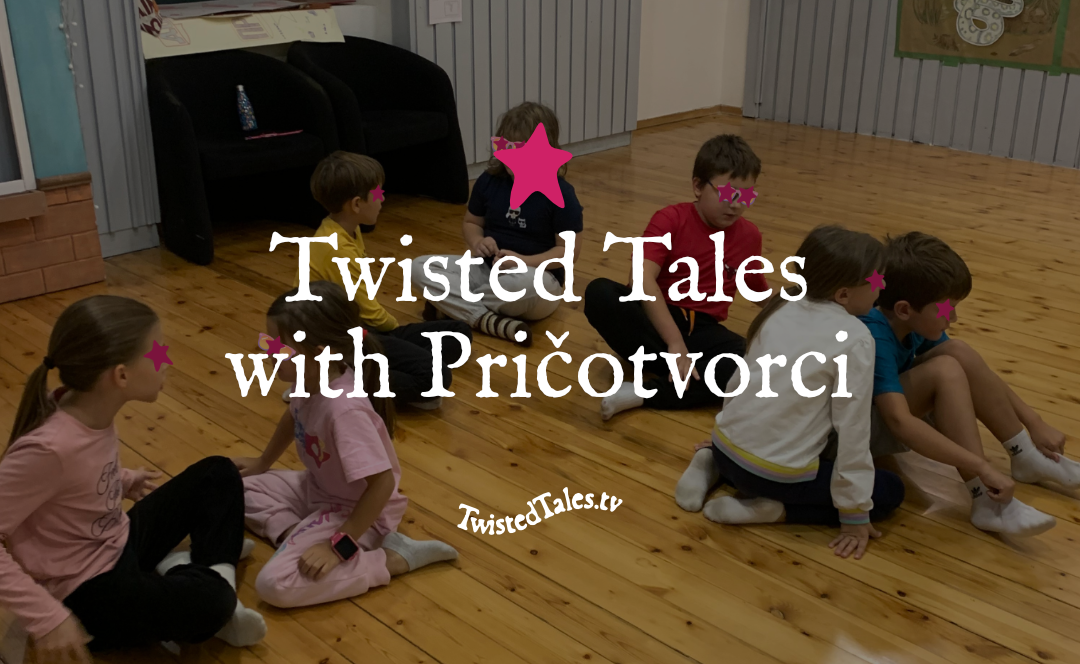
To begin, we played a game of passing on a movement. Each child came up with a movement, showed it to the child next to them, who then took it over and passed it on around the circle. Later, we allowed the movement to change slightly as it was passed on. The game served as a short physical warm-up and an introduction to the idea of change and how the same content can be experienced differently.
The main part of the workshop consisted of telling the whole story using the Whoosh technique. The children were in a circle while I read and narrated the text scene by scene. At the same time, as new characters, objects and situations appeared in the story, I would choose children who would immediately step inside the circle and take on the roles. When a scene ended, I would say “Whoosh!”, everyone would leave the central space and the scene would be completely cleared. We then built the next part of the story from scratch, with a new arrangement, new characters and often different children in the roles. In this way, the entire story passed through their bodies and reactions rather than just remaining at the level of listening.
In this way, during the workshop the children took on the roles of Filip, the girl narrating the story, her brother, the teacher, the pupils who make fun of Filip, as well as objects like the paper theatre. The roles were constantly changing, allowing more children to experience different perspectives within the same story.
Each part of the text was performed. The children first responded to what they were hearing, using movement, facial expressions, body language or a short action. At certain points, we would pause and allow the characters to improvise a short conversation. In one part, we also used eavesdropping within the Whoosh technique to hear what the pupils were saying to each other and how they perceived Filip. The pupils reenacted a heated classroom debate in which everyone defended their right not to share their materials.
It was particularly important to us how the attitude towards Filip changes as the story progresses. At first, the children saw the same things as his classmates saw: his behaviour, his clothes, the paper bag, his silence and his outbursts. As they learn more about his life, the same events begin to look different.


In the final part, we returned to two key scenes and no longer just repeated them from the script, but used them for further work and exploration.
In the first version of the scene, each child, in the role of a pupil, said something hurtful or rejecting to Filip. We then stopped the play and discussed the following questions:
✹ Why are those children saying these things?
✹ What is happening within the group?
✹ How does Filip feel?
✹What happens when everyone adopts the same way of behaving towards one child?
The children’s answers were mostly that those who bully others want to look “cool”, be entertaining or gain attention, and don’t think about other people’s feelings.
After the discussion, we tried to change the scene. The children themselves suggested what the pupils could do differently: invite Filip to play, apologise to him, sit next to him, start a conversation or include him in a group activity.
We then acted out the same situation again, this time with different actions. After the second version, we discussed how the characters felt and what had changed in their relationships. The children generally concluded that they felt better and more satisfied after apologising and improving the way they communicated with Filip.
This final part was the most pronounced element of process drama in the workshop. The children first entered the existing situation from the story, then analysed it together, suggested alternative possibilities and finally tried them out through a new version of the scene.
In this way, they could experience first-hand how one different decision can change the relationship within a small community.
The workshop concluded with a discussion about exclusion, belonging, apologising, and practical ways we can include someone who has been left out.
Conclusion
From my conversations with the children, I learned that the participants who have been in my programme since last year, when they first heard about Twisted Tales through our work on Cinda Real, use the Twisted Tales app and listen to the stories outside of the workshops as well. The children who joined this year particularly highlighted that the story was relatable to their own school experiences. They easily recognised the situation as one involving bullying, tried to explain why the other children treated Filip the way they did, and very maturely suggested different actions and ways of including him in the group. They particularly enjoyed the combination of storytelling and process drama, and several of them said at the end that they would like us to work in this way more often.