

Beyond Curriculum – Manor Gardens Primary School Co-creation Workshop
Location: Manor Gardens Primary School, Durban, South Africa
Story: Filip and the Paper Theatre
Age group: 7-9 years old.
Workshop Focus: Storytelling, Illustration, Sound & Acting
The Twisted Tales workshop at Manor Gardens Primary School centred on Filip and the Paper Theatre.
Story Reception & Emotional Engagement
From the initial story reading, learners demonstrated a strong emotional connection to the narrative. The story clearly resonated with them, particularly Filip’s social isolation, material circumstances, and treatment by peers and authority figures.
Psychologically, the group showed high emotional receptivity:
Learners displayed empathy without prompting, frequently verbalising concern for Filip.
Many children identified Filip as “kind,” “misunderstood,” and “unfairly treated,” indicating early moral reasoning and perspective-taking.
His financial situation was not treated as a deficit but as a context that deserved understanding and protection.
Notably, learners did not distance themselves from Filip’s experience. Instead, they leaned toward identification, signalling emotional safety within the fictional frame of the story.
Illustration & Symbolic Understanding
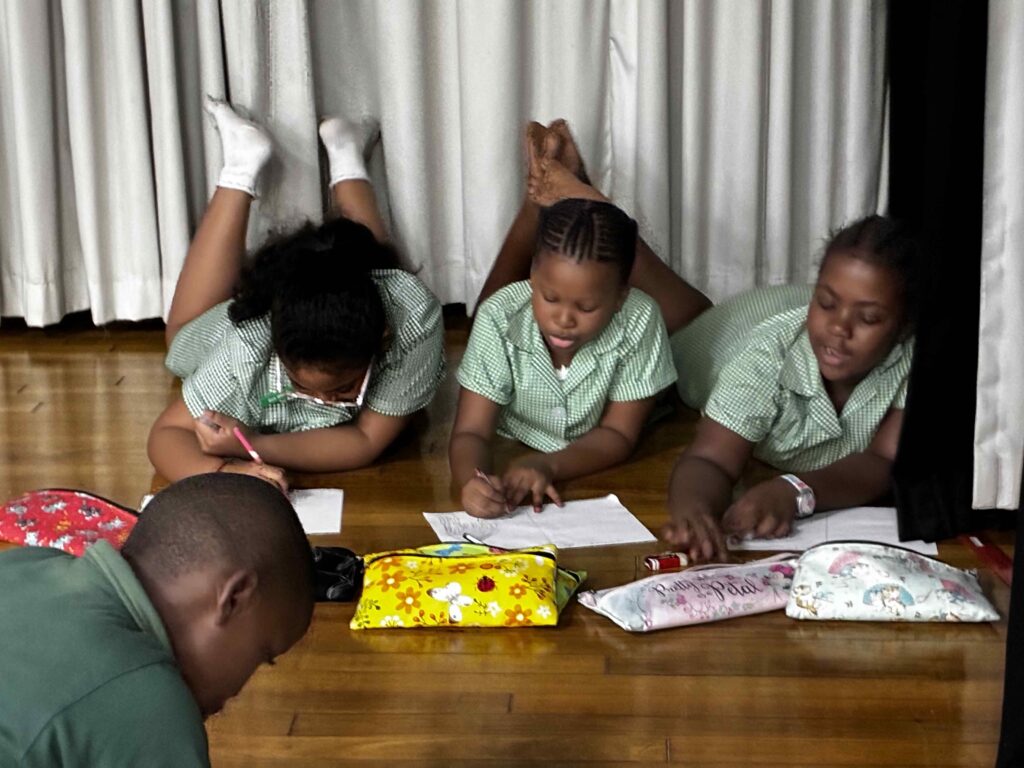
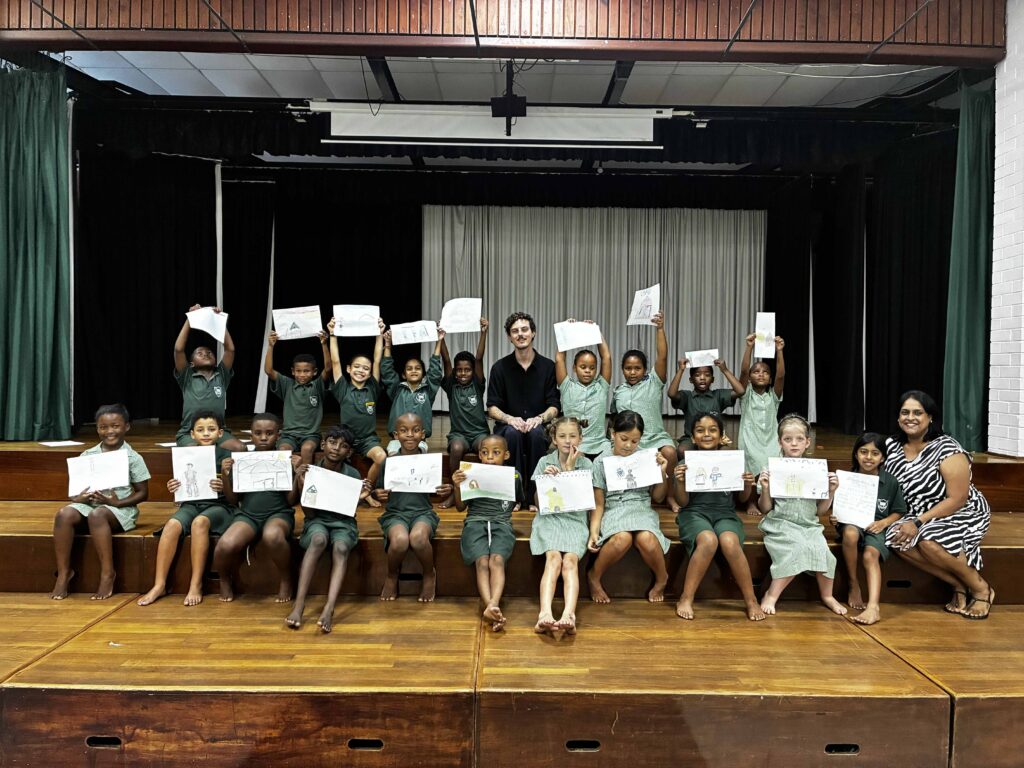
The illustration segment was met with enthusiasm and clarity, learners fully grasped the concept of visual storytelling as a way to express emotion rather than simply decorate scenes.
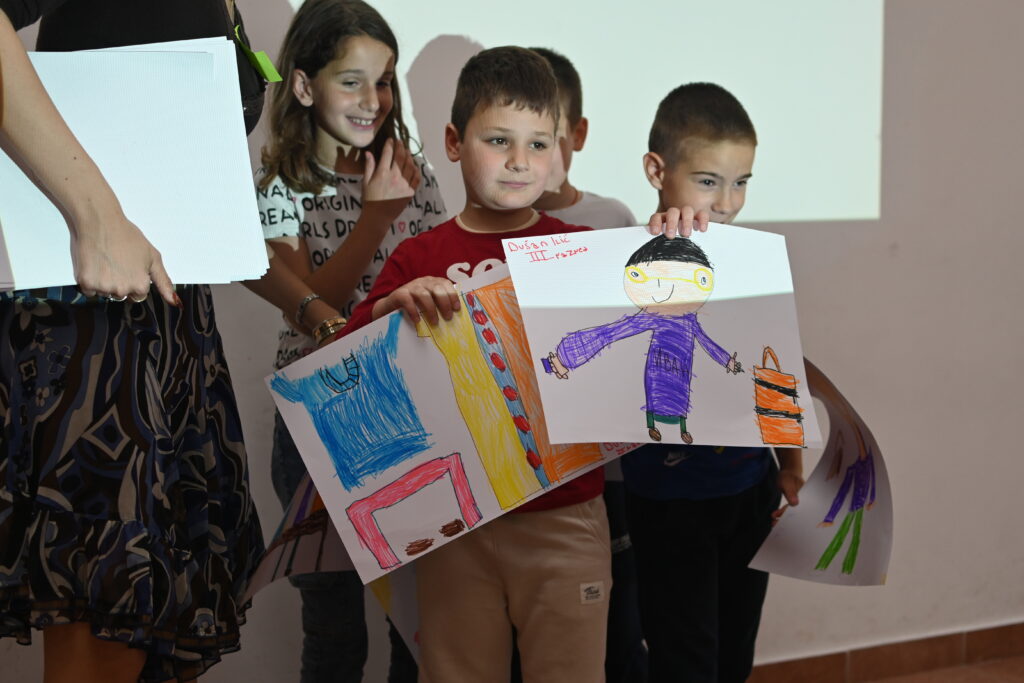
They used imagery to highlight vulnerability, demographics and contextual thinking (a few drew his old house and a few focused on the story of the three little pigs, while others drew the theatre).
They demonstrated symbolic thinking, often exaggerating or softening features to communicate feeling rather than realism.
This suggests that illustration functioned as a non-verbal emotional processing tool, allowing learners to externalise complex feelings without the pressure of verbal explanation.
Sound, Acting & Embodied Empathy
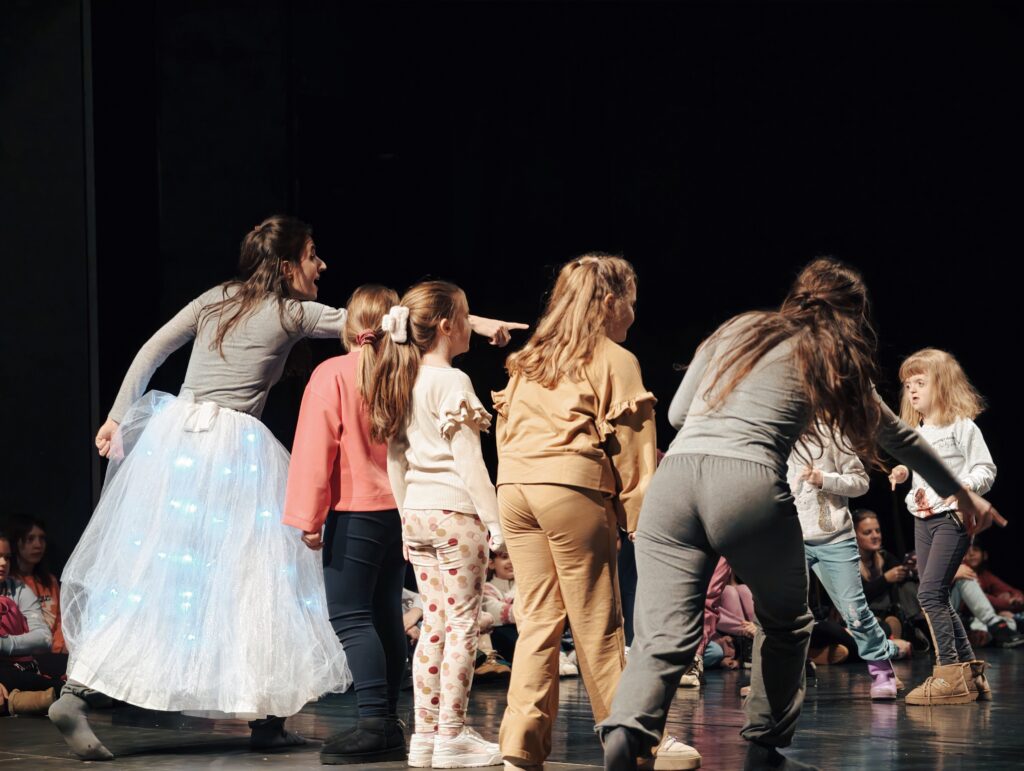
The sound and acting portion of the workshop was the most energetically engaging for the group. Learners expressed clear enjoyment and emotional investment, as well as openness and willingness to express thoughts and feelings.
Key observations:
A significant number of children wanted to act as Filip, not the bully or neutral characters.
This choice reflects deep empathetic identification rather than avoidance.
Learners used sound and movement to convey loneliness, tension, and release, showing intuitive emotional literacy. Sounds such as thunder, rain, clocks ticking, paper moving, paper bags tearing, crying, shouting and creaking floorboards were brainstormed by the group.
Embodiment allowed learners to step into Filip’s experience safely, reinforcing empathy through physical and emotional simulation rather than abstract discussion.
Moral Reasoning & Authority
Several learners explicitly questioned the teacher’s behaviour in the story. A recurring sentiment was that:
“The teacher shouldn’t have been so mean.”
“She should have helped him when he was crying in the circle.”
“Teachers should be kind”
This indicates:
A developing sense of moral accountability for authority figures.
An understanding that harm can come not only from peers, but from inaction or emotional neglect by adults.
Rather than rejecting the teacher entirely, learners framed her as someone who failed, suggesting nuanced moral reasoning rather than binary judgement.
Workshop Leader Notes & Narrative Insights
Learners strongly felt that the sister who helped Filip needed a name, reflecting their instinct to humanise and anchor positive relational figures.
Suggested names included: Remy, Lilly, Rose, Lucy, and Julia.
In contrast, learners did not want to name the brother who bullied Filip.
This reluctance may reflect an intuitive distancing from negative identification.
Psychologically, withholding a name can function as a way to reduce power, limit emotional investment, or avoid normalising harmful behaviour.
When invited to discuss personal experiences of bullying, some learners showed clear resistance, only a few hands were raised to share.
Importantly, this resistance did not indicate disengagement. Instead, it suggests:
A need for emotional safety.
A preference for projective processing through story, rather than direct self-disclosure.
The fictional narrative provided enough distance for learners to explore difficult emotions without reactivating personal distress.
Psychological Reflection
This workshop highlighted the effectiveness of the Twisted Tales approach in:
Enabling empathy without forcing vulnerability.
Allowing children to process injustice, poverty, and exclusion through symbolic and creative means.
Supporting moral development by encouraging reflection on responsibility, care, and fairness.
Learners did not simply understand Filip’s situation cognitively — they felt it, embodied it, and defended it. The repeated desire to protect, name, and be Filip reveals the story’s capacity to foster deep relational empathy.
Conclusion
The Twisted Tales workshop at Manor Gardens Primary School demonstrated how story-based, creative methodologies can open meaningful psychological and emotional engagement in children. Filip and the Paper Theatre functioned as both a mirror and a safe container, allowing learners to explore empathy, injustice, and responsibility without direct exposure or retraumatisation.
The session reinforced Twisted Tales’ core principle:
when children are given story, creativity, and permission to feel — they rise to empathy naturally.